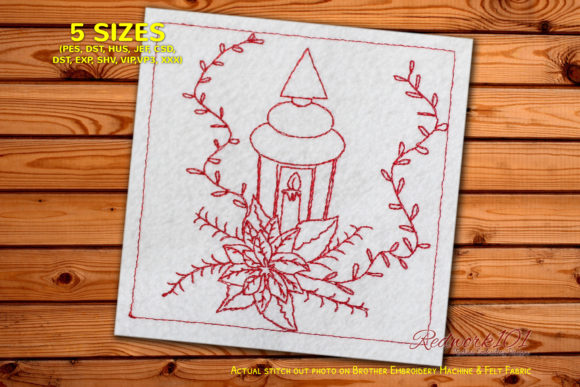
Christmas Bouquet Redwork Design: A Designer’s Review
When I first opened the Christmas Bouquet Redwork Design file, I felt that familiar mix of anticipation and professional caution that comes with testing a new machine embroidery design for my shop. I run a small personalized gift studio, and every embroidery file I add to my rotation needs to earn its place—not just in my digital library, but on the finished products I hand to customers. So I sat down with this redwork bouquet over several evenings, stitching it on different blanks, and I want to share what I found for anyone who sells handmade products, runs an Etsy shop, or creates custom wedding gifts and baby embroidery.
First Impressions: Mood, Detail, and Emotional Appeal
The Christmas Bouquet Redwork Design immediately struck me as warm and classic, but not stiff. It has that hand-drawn charm that redwork is known for, with a bouquet arrangement that feels both seasonal and sincere. The line quality is clean, and the floral elements carry a soft romantic weight that could easily work for a grandmother’s gift or a newlywed couple’s first Christmas together. It is not overly cutesy or cartoonish—it leans elegant without being fussy, and that makes it versatile for everything from nursery decor to kitchen towels.
Emotionally, this design lands in a sweet spot. It feels handmade without looking amateur, and that is exactly what builds customer trust in a finished product. When I showed a test stitch to a friend who runs a craft fair booth, she said it reminded her of vintage holiday linens. That kind of emotional connection is gold for personalized gift sellers because it invites the buyer to imagine the item in someone’s home, not just on a shop shelf.
Where This Design Shines in Your Product Line
The Christmas Bouquet Redwork Design is not a one-trick pony. I tested it on several product categories and found clear winners for different customer types.
- Baby embroidery and nursery decor: Stitched on a soft muslin blanket or a small pillow cover, the redwork style feels gentle and heirloom-like. A new parent looking for a meaningful gift would appreciate the understated seasonal touch. I recommend using a lighter thread color on cream fabric for a vintage baby gift feel.
- Wedding gifts: This design works beautifully on linen kitchen towels or a set of embroidered napkins for a holiday wedding. The bouquet motif naturally suits a couple’s first Christmas together. I paired it with a simple monogram and the result looked elevated and thoughtful.
- Personalized towels and aprons: On a quality cotton towel or a canvas apron, the redwork stands out clearly. The line art does not get lost in the weave, and the design holds up well after washing when proper stabilizer is used. This makes it a strong candidate for custom embroidery orders.
- Tote bags and pillow covers: For craft fair products or Etsy listings, a tote bag with the Christmas Bouquet Redwork Design photographs beautifully. The redwork style gives a crisp, clean look that reads well in product photos, helping buyers see the detail before they purchase.
- Blanket embroidery: Whether it is a fleece throw or a cotton quilt panel, this design adds a personal touch without overwhelming the fabric. It is large enough to feel substantial but not so dense that it stiffens the blanket.
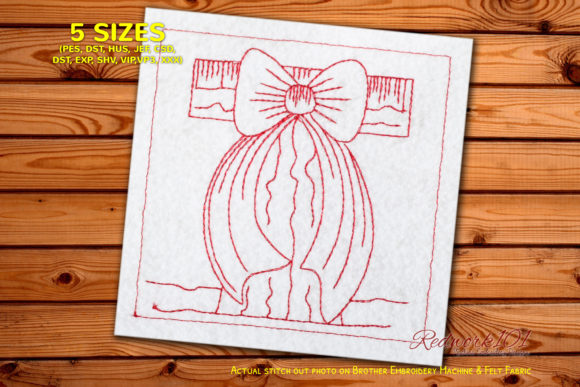
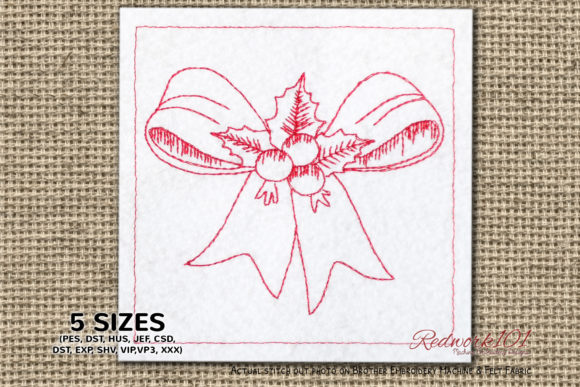
I also want to highlight the optional box stitch mentioned in the product description. The Box Stitch shown in the picture is optional, and the color of the outer box is different in most designs unless it is part of the design itself. You can skip the color directly if you prefer an open bouquet look. I tested it both ways—with the box, the design feels more structured and traditional. Without it, the bouquet floats more freely and feels softer. Both versions have a place in a small shop product lineup, so I recommend offering customers a choice if you are taking custom orders.
Where to Use Careful Judgment
No design is perfect for every surface, and the Christmas Bouquet Redwork Design has areas that require attention. Here is where I advise caution based on my test stitches.
- Small lettering and delicate details: If you plan to add text near the bouquet, keep the font size generous. The redwork lines are fine, and tiny lettering next to them can look cluttered. I tested a 0.3-inch script next to the design and it lost definition. Stick to at least 0.4-inch lettering for clarity.
- Textured fabric: On thick towels or terry cloth, the fine lines of the redwork can sink into the loops and appear broken. Use a medium-weight cutaway stabilizer and a sharp needle to keep the stitch definition crisp. Test on a scrap towel before committing to a customer order.
- Stretchy baby clothes: Onesies and knit fabrics can distort the design if not stabilized properly. I recommend a tear-away stabilizer topped with a lightweight fusible interfacing to keep the fabric from puckering. Do a test stitch on the same fabric blend you plan to sell.
- Curved surfaces: Tote bag handles, curved pockets, or small cylindrical items are tricky. The bouquet has a balanced shape, but if it is forced onto a curve, the outer petals can stretch. Hoop carefully and consider a smaller hoop size if the surface is tight.
- Dark fabric: Redwork traditionally uses red thread on light fabric, but if a customer wants a dark base, you will need to use a lighter thread color or a bobbin thread that contrasts well. Test the color contrast under natural light and indoor light before stitching the final product.
- Products needing frequent washing: Kitchen towels, baby blankets, and aprons go through the laundry often. Use a high-quality polyester or rayon thread that holds its color, and always pre-wash the fabric to prevent shrinkage that could distort the design.
How This Design Affects Giftability and Perceived Value
One of the most important things I evaluate as a designer is whether a machine embroidery design makes the finished product feel more valuable. The Christmas Bouquet Redwork Design absolutely does that. The redwork style has a heritage quality that signals care and craftsmanship. When a customer receives a personalized towel or pillow cover with this design, they perceive it as a keepsake, not a mass-produced item.
From a product photography standpoint, this design photographs beautifully. The clean lines and open areas allow the fabric texture to show, which helps online buyers trust the handmade quality. I found that a simple flat lay shot with natural light highlighted the bouquet detail without needing heavy editing. That matters for Etsy sellers and anyone running a small shop product page—good photos improve buyer engagement and conversion rates.
The emotional connection is strong here. A customer buying a wedding gift or a baby embroidery item wants to give something that feels personal. The Christmas Bouquet Redwork Design communicates thoughtfulness. It is not generic. It looks like someone took the time to choose a design that fits the recipient. That builds customer trust and encourages repeat orders, especially for custom embroidery shops.
Practical Embroidery Notes Before You Sell
Before I add any embroidery file to my commercial lineup, I run through a checklist. Here is what I recommend for the Christmas Bouquet Redwork Design based on my testing.
- Test on scrap fabric first: Always stitch the design on a sample of the exact fabric you plan to sell. Thread tension, fabric weave, and stabilizer choice all affect the final look. Do not skip this step, even if you have used the design before on a different blank.
- Check thread color contrast: The description notes that the outer box color can vary. I suggest trying a deep red thread for the bouquet and a matching or complementary color for the optional box. On cream fabric, a bright red really pops. On natural linen, a slightly muted brick red feels more vintage. Stitch a small section and view it from a few feet away to ensure the contrast works.
- Confirm hoop size: I do not have the exact hoop size in front of me, but the design appears to fit a medium hoop comfortably. Before you market it to customers, stitch it out in your hoop and note the dimensions. Include those dimensions in your product listing so buyers know what to expect on their chosen blank.
- Review stitch density: Redwork designs typically have moderate stitch density, but I always check for areas where the needle might overlap too much. If the bouquet’s center feels dense, use a lighter stabilizer to avoid puckering. If the lines are too sparse in some petals, consider a slightly thicker thread weight.
- Use proper stabilizer: For most cotton and linen fabrics, a medium-weight cutaway stabilizer works well. For towels and thick fabrics, use a firmer stabilizer to keep the stitches from sinking. For stretchy knits, a combination of tear-away and fusible interfacing gives the best result.
- Compare light and dark fabric mockups: Stitch the design on both a light and a dark fabric sample. The redwork style is designed for light backgrounds, but if you plan to offer dark options, adjust the thread color accordingly. A white or gold thread on dark fabric can create a striking look, but test it thoroughly.
- Check small details after stitching: Once the design is complete, inspect the fine lines and any tight curves. If a petal tip has pulled away from the fabric or a leaf edge looks jagged, adjust your tension or stabilizer before stitching another piece.
- Confirm commercial licensing: The product description does not specify license terms, so I recommend contacting the designer or checking the included documentation before selling finished products. Many embroidery files allow commercial use, but some require a separate license. Protect your business by knowing the terms upfront.
Final Thoughts for Shop Owners and Designers
The Christmas Bouquet Redwork Design is a strong addition to any machine embroidery design library, especially for those who focus on personalized gift products. It offers emotional warmth, clean detail, and versatility across baby gifts, wedding keepsakes, home decor, and seasonal items. The optional box stitch gives you flexibility to offer two distinct looks from one embroidery file, which is always a win for Etsy sellers and handmade product creators.
I have added it to my rotation for custom orders and plan to feature it in my holiday product lineup. If you test it carefully, consider your fabric choices, and communicate the optional box clearly to customers, this design can elevate your shop’s perceived value and keep buyers coming back for more meaningful, handmade gifts.