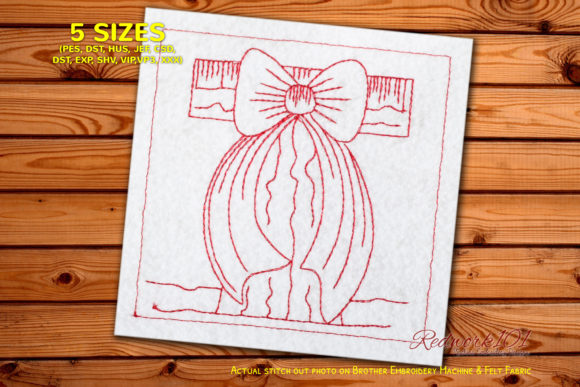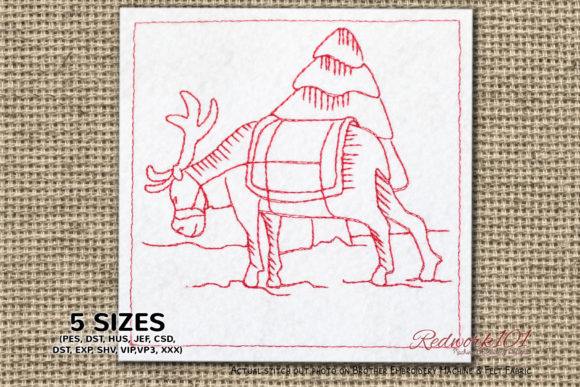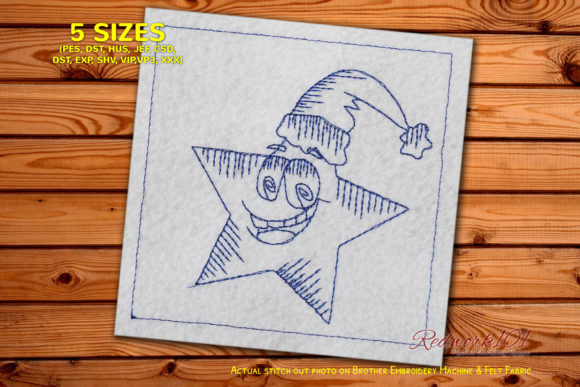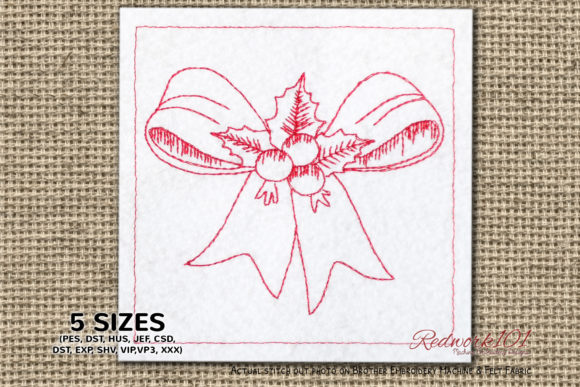
Santa's Face Redwork – A Designer's First Look
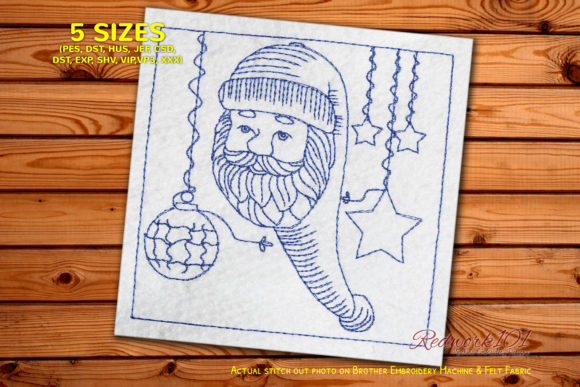
When I first opened the embroidery file for Santa s Face Redwork, I was immediately drawn to its clean, classic feel. This is not a dense, heavily shaded portrait. It is a redwork design, which means the charm comes from crisp line work and a restrained palette. The shape is friendly and recognizable, with a mood that feels both nostalgic and practical. This is the kind of design that could become a reliable staple in a holiday lineup, especially for makers who serve customers looking for something traditional without being overly fussy or cartoonish.
The Visual Personality and Natural Fit
What strikes me most about Santa s Face Redwork is how approachable it is. The face is warm, the expression is gentle, and the redwork style gives it an heirloom quality. This is not a loud, glitter-heavy Christmas motif. It feels like something you would see on a handmade gift that is meant to be kept and used year after year. The optional box stitch adds a framed effect, which can make the design read as a finished piece on its own. If you skip the outer box, the face floats naturally, which works beautifully on smaller items or curved surfaces.
For an embroidery project, this design naturally belongs on items where a classic holiday touch is welcome. I see it working well on kitchen towels, apron fronts, pillow covers, and tote bags. It also fits nicely on sweatshirts and t-shirts for holiday markets. The redwork aesthetic means it stitches quickly and uses minimal thread, which is a practical advantage when you are producing multiple units for a craft fair or an Etsy shop.
Real Use on a Custom Tote Bag
Let me walk through a real scenario. A customer comes to my shop wanting a set of personalized holiday gifts for her extended family. She wants something that feels handmade but not overly cutesy. I suggest a medium-weight canvas tote bag with Santa s Face Redwork stitched on the front panel. The redwork style keeps the production time reasonable, and the single-color look means I can offer it in different thread colors if the customer wants red on natural, or even a dark thread on a light bag for contrast.
After stitching the first sample, I notice the design reads clearly on the canvas. The facial features are distinct. The beard area, likely done in a combination of running stitch and satin stitch elements, has enough detail to feel complete without becoming muddy. The optional box stitch, which I chose to include in a slightly darker red, gives the tote bag a framed art piece look. When I showed the sample to the customer, she immediately said it felt like something her grandmother would have proudly used during the holidays. That is exactly the reaction you want for a gift item.
How It Performs on Different Garments and Surfaces
Every experienced embroidery designer knows that a design that looks great on a flat hoop can behave differently on a curved cap or a stretchy sweatshirt. With Santa s Face Redwork, I found the design stays readable across a range of fabrics because of its open, line-based structure.
On a cotton sweatshirt or a t-shirt, the stitch density is low enough that the fabric does not pucker or distort. This is a relief for anyone who has struggled with heavy fill designs on knits. The design also works well on baby clothes and toddler apparel, where softness and flexibility matter. Because the stitch count is moderate, the back of the garment remains comfortable against the skin, which is a detail parents notice.
For caps and hats, the design is small enough to fit on the front panel without wrapping awkwardly around the curve. I would recommend using a firm stabilizer and testing the placement on a curved surface before committing. But the line art style handles the curve better than a dense fill stitch design would.
On patches, Santa s Face Redwork shines. The redwork lines stitch out cleanly on twill or felt, and the design can be cut close to the edge if you skip the outer box. I have seen similar designs used as sew-on patches for denim jackets, backpacks, and even as decorative elements on homemade blankets.
Where to Use It Carefully
No design is perfect for every situation. I want to flag a few areas where Santa s Face Redwork might need extra attention.
Small hoop sizes: If you are working with a 4x4 hoop, confirm that the entire design, including the optional box stitch, fits comfortably. The face itself should fit, but the outer box might push the boundaries. Always check the hoop size requirement before you start.
Dark fabrics: Redwork is traditionally stitched in red thread on a light or natural background. On dark fabric, the red thread may not pop the same way. Consider using a white or metallic thread if stitching on dark garments. Test a sample before accepting a bulk order.
Stretchy fabrics: While the stitch density is low, stretchy knits still require proper stabilization. Use a cutaway stabilizer for t-shirt fabric, and consider a light fusible interfacing on the back of the fabric to prevent the stitches from distorting when the garment is worn or washed.
Products that need frequent washing: Tea towels, napkins, and baby blankets see a lot of wear and washing. Because redwork uses single lines, the thread can be prone to breaking if it snags. Use a quality polyester thread and a tight satin stitch where possible to increase durability. Avoiding the box stitch on high-use items can reduce the number of thread changes and potential snag points.
Visual Appeal and Customer Perception
When a customer sees a finished product with Santa s Face Redwork, the reaction is usually positive. The design looks intentional and crafted, not like a generic clip art converted to stitches. The redwork style suggests care and tradition, which adds to the perceived value of the item. This matters for Etsy sellers and small shop owners who need their products to stand out in a sea of holiday goods.
The design also photographs well for printable mockups and online listings. Because it is a single-color or two-color design, it is easy to stage against neutral backgrounds. The clean lines mean the design remains legible even in smaller product photos. For digital product sellers, this is a strong asset to offer as part of a digital embroidery file bundle, especially when paired with a machine embroidery design collection for the Christmas season.
Practical Designer Notes Before Stitching
Before you load the file and hit start, here are a few practical checks I run on every new design, and Santa s Face Redwork is no exception.
- Test on scrap fabric first. Even a design that looks perfect on screen can have surprises. Stitch it once on a piece of muslin or cotton to see how the thread colors read and whether the stitch order makes sense.
- Check thread color contrast. The description mentions that the outer box can be a different color. Decide whether you want the box to match the face or contrast. If you use a different color, make sure it complements the main red and does not clash with the fabric.
- Review stitch density. Redwork designs generally have low density, but check the beard and hat areas for any unexpected fill stitch sections that might stiffen the fabric.
- Confirm hoop size. Make sure your hoop can accommodate the full design if you include the box stitch. If you are using a small hoop, you may need to skip the box or resize the design.
- Inspect small details. Look at the eyes, nose, and mouth. On a small hoop, these details should remain readable. If they become too small, consider resizing the design slightly larger within your hoop limits.
- Test in black and white. A grayscale printout of the design can help you see the stitch direction and density more clearly before you stitch.
- Compare light and dark fabric. Stitch the design on both a light and a dark fabric sample. This helps you see how the fabric color affects the overall look and whether you need to adjust thread colors.
- Use proper stabilizer. For most applications, a medium-weight tearaway or cutaway stabilizer will work. For stretchy fabrics, use cutaway. For dense fabrics like canvas, tearaway is usually sufficient.
- Check licensing. Before you sell finished products or the embroidery file itself, confirm the license terms. Some designs allow unlimited commercial use, while others restrict resale of the digital file. When in doubt, contact the designer.
How This Design Fits in a Small Business Lineup
For craft business owners and handmade product entrepreneurs, Santa s Face Redwork is a versatile addition to a holiday collection. It can be stitched on custom apparel, personalized gifts, home decor, and accessories. The redwork style gives the product a cohesive look, especially if you offer multiple redwork designs in a series. Customers who buy one holiday tea towel often come back for matching pillow covers or aprons.
The design also works well for commercial embroidery projects. If you are producing orders for local boutiques or corporate holiday gifts, the clean look and moderate stitch count keep production efficient. The finished product looks premium without requiring excessive machine time.
For apparel decorators, this design is easy to position on left chest areas, center fronts, or even as a back neck detail. Its size and shape make it adaptable to different garment styles, from t-shirts to hoodies to aprons.
Final Thoughts on Santa s Face Redwork
Santa s Face Redwork is a design that respects the tradition of redwork embroidery while staying practical for modern use. It has the visual warmth that customers look for in holiday embroidery, and the technical profile that machine embroidery professionals appreciate. Whether you are stitching a sweatshirt embroidery for a family member or producing a batch of embroidered patches for a local market, this design holds up well.
My advice is to test it on your most common fabric type first, decide early whether to include the optional box stitch, and always check the thread colors against your chosen background. If you do those things, Santa s Face Redwork will serve you well through many holiday seasons.